Post and rail
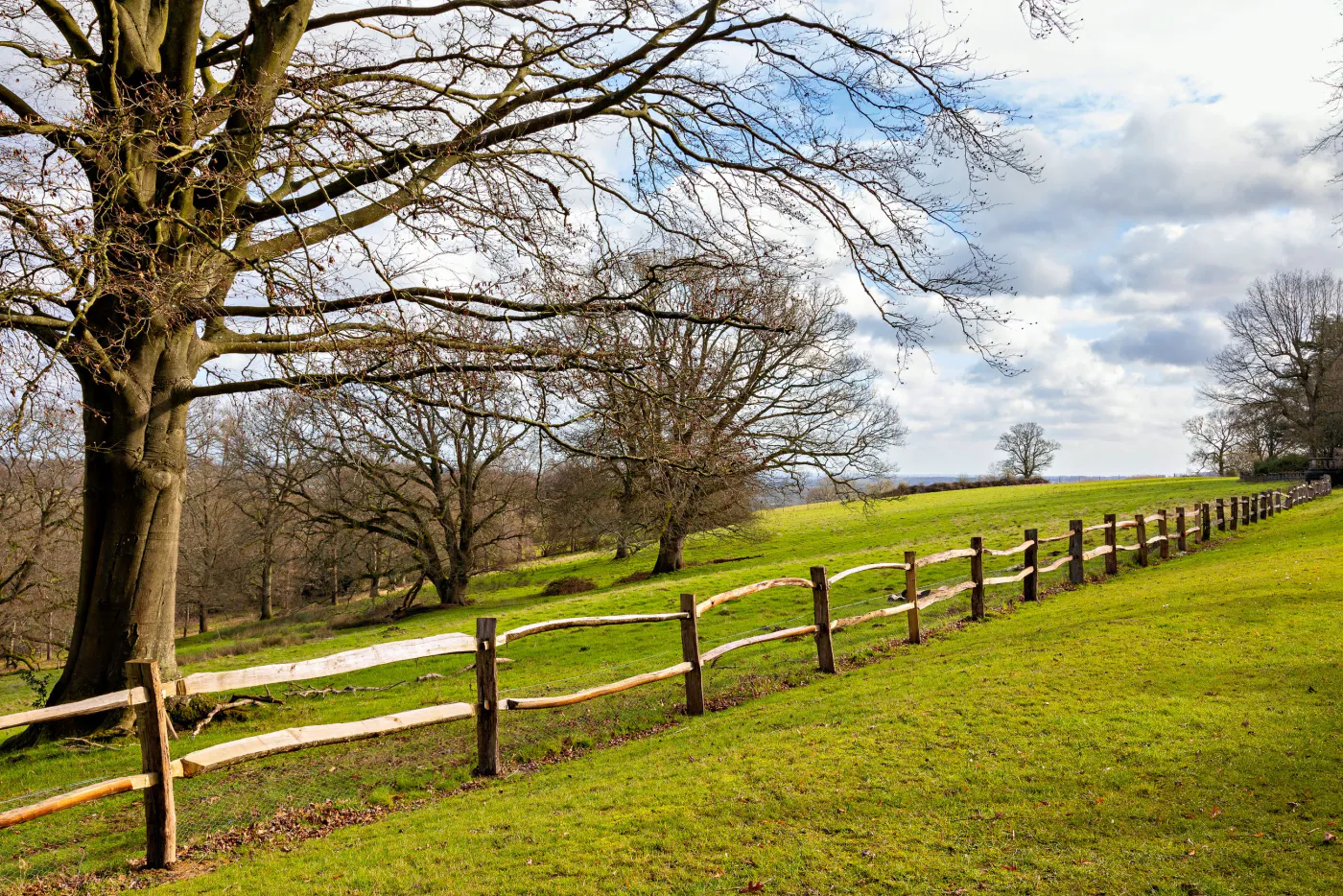
Three rails on sawn treated or oak posts, or cleft chestnut for a softer, rural look. The standard for paddocks, parkland and long drive boundaries, and the most forgiving on a slope.
Best for Paddocks, horses, estates, open views
Fencing, gates & walls · Harrogate
Post and rail across paddocks, close-board for privacy, oak gates and stone walls, for homes, estates and equestrian properties across North Yorkshire.
A boundary is the first thing anyone sees of a property and the last thing you want to rebuild. It has to look right from the lane, keep in whatever it's meant to keep in, and still be straight in twenty years.
We set out every run properly, set posts deep enough for the soil and the job, and hang gates so they swing true and latch first time. Where a wall is the better answer, we rebuild in stone to match what's already there.
Which boundary?
Three rails on sawn treated or oak posts, or cleft chestnut for a softer, rural look. The standard for paddocks, parkland and long drive boundaries, and the most forgiving on a slope.
Best for Paddocks, horses, estates, open views
Vertical feather-edge boards on rails, with a gravel board at the bottom so the timber never sits in wet soil. Solid, private and quiet.
Best for Privacy, back gardens, road boundaries
Hit-and-miss or horizontal slats let light and air through while blocking the view. A more contemporary look that works well around terraces and bin stores.
Best for Modern houses, screening around terraces
Oak field gates, garden gates and pedestrian gates, hung on posts set to carry the weight, with ironmongery that matches the property.
Best for Drives, paddocks, walled gardens
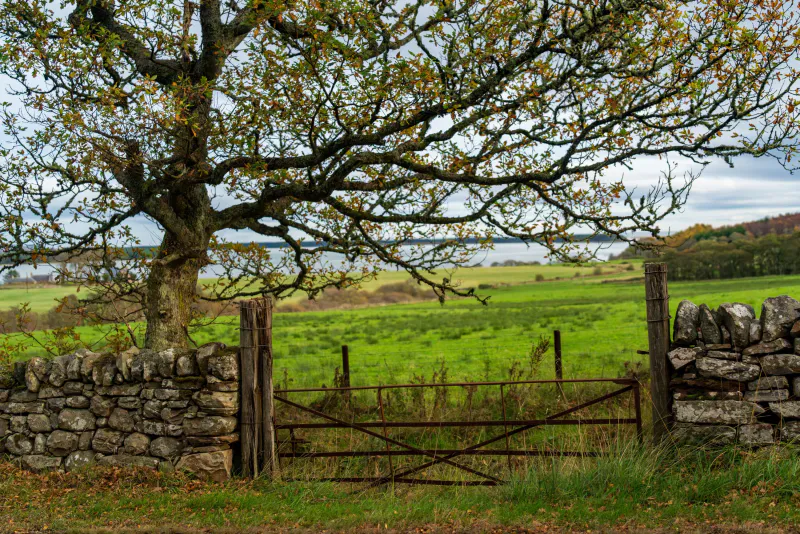
Boundary walls rebuilt or extended in stone to match the existing, dry-laid or bedded in lime mortar depending on the wall.
Best for Period properties, conservation areas, field boundaries
How we build
We agree the exact line with you, check it against the boundary and scan for buried cables and pipes before anything is dug.
Heights next to roads, conservation areas and listed buildings all have limits. We check them before quoting so there are no surprises.
Posts are set deep enough for the soil and the load, concreted or driven depending on the fence. Gate posts are bigger and deeper again.
Rails and boards go on with galvanised or stainless fixings so they don't stain or rust through. Gates are hung, adjusted and latched.
Spoil is cleared, ground made good, and we walk the line with you at the end.
When to book
Fencing and walls can be built all year, though very wet ground slows post-setting in midwinter. Paddock fencing is easiest planned around when the horses are turned out.
FAQs
In England, up to two metres in most gardens, or one metre next to a road or footpath used by vehicles. Listed buildings and some conservation areas need consent for any new boundary. We'll check before we quote.
Post and rail: three rails on sawn treated or oak posts, or cleft chestnut for a more rural look. We set the posts deep enough to stay firm when horses lean on them.
Pressure-treated softwood posts set properly last 15 to 20 years; oak lasts considerably longer. Gravel boards keep panels off the ground so they don't rot from the bottom.
Yes. We rebuild and extend boundary walls in stone to match what's already there, dry-laid or with lime mortar as the wall needs.
We'll walk the line with you, check the rules for your property, and follow up with a fixed quote.