Leylandii & conifers
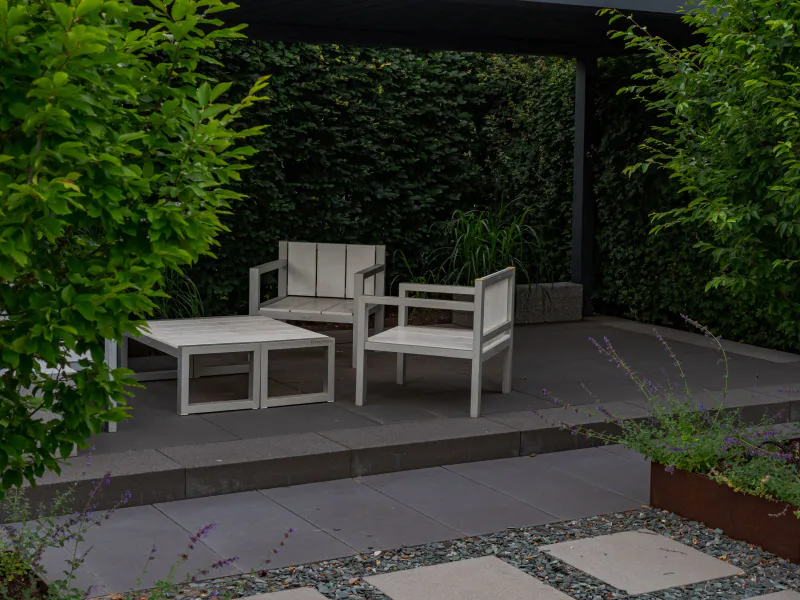
Fast-growing and easy to let get away. The top can be taken down and held, but the sides won't regrow from bare brown wood, so reductions have to stop in the green.
Cut Late summer, once or twice a year
Hedge cutting · Harrogate
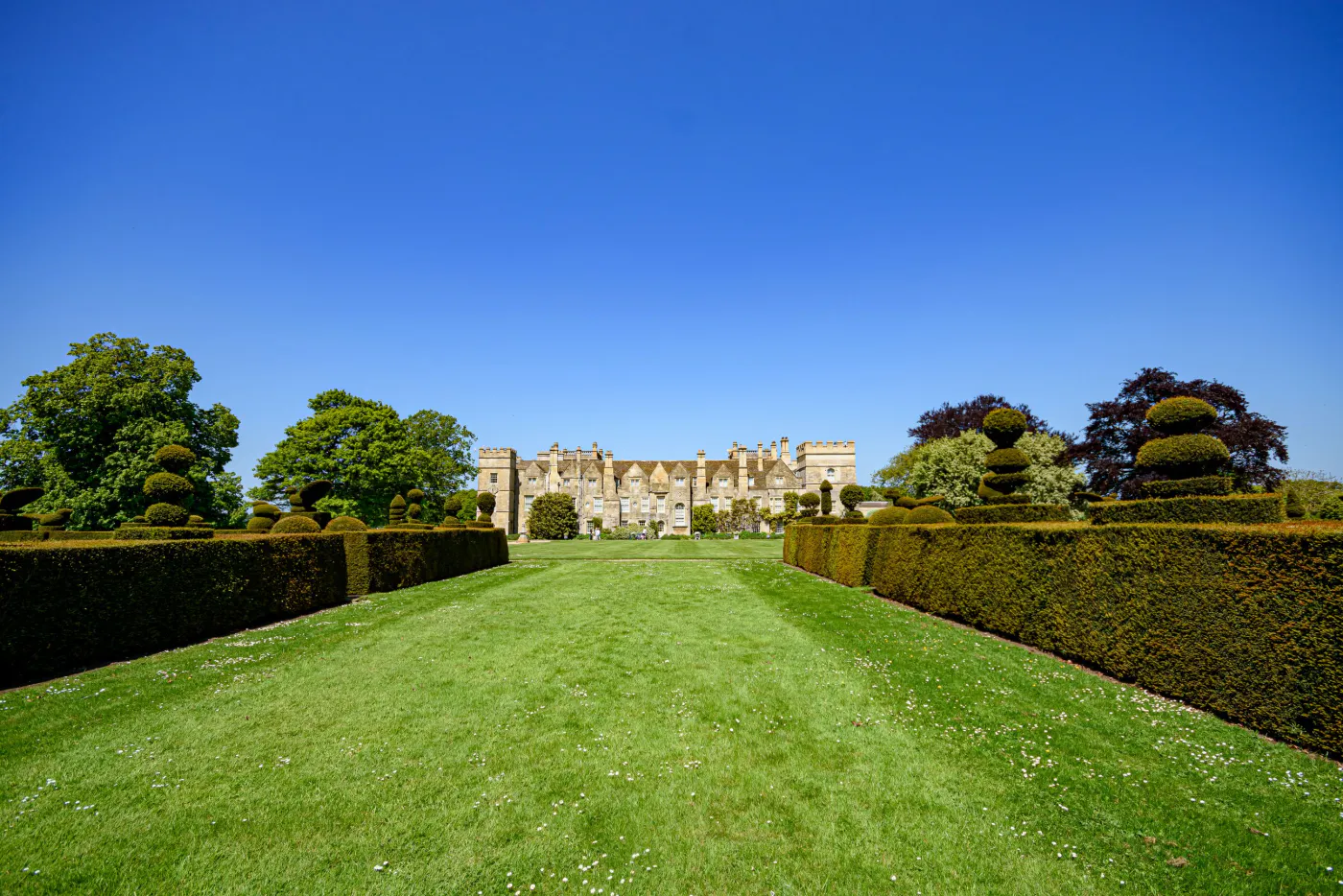
Tall boundary hedges, long estate hedges and formal hedging, cut, reduced and kept in shape across Harrogate and North Yorkshire. The big ones a gardener with a ladder can't reach.
Most hedges are fine with a gardener and a trimmer. The ones we get called for aren't: four-metre leylandii along a boundary, a hundred metres of beech down a drive, a yew hedge that's been left too long and needs bringing back.
We cut from proper access equipment, set lines so the faces are straight and the tops level, and clear everything away. We don't do mowing or weekly gardening, but big hedges are a job of their own, and the hedges we've planted we're happy to keep in shape year after year.
Hedges we cut most
How hard a hedge can be cut, and when, depends on what it's made of. Get it wrong and some won't grow back.
Fast-growing and easy to let get away. The top can be taken down and held, but the sides won't regrow from bare brown wood, so reductions have to stop in the green.
Cut Late summer, once or twice a year
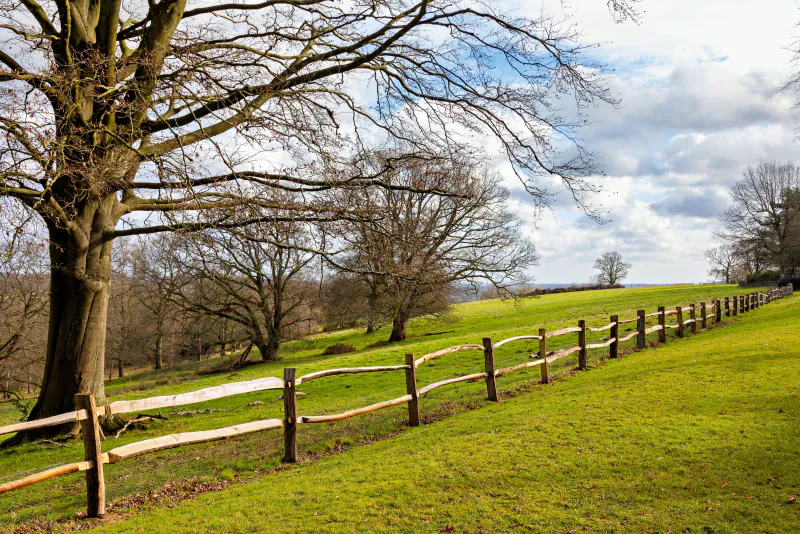
Big leaves that look ragged if they're shredded. It regrows well from old wood, so an overgrown laurel can be cut back hard and will recover.
Cut Late summer; hard cuts in late winter
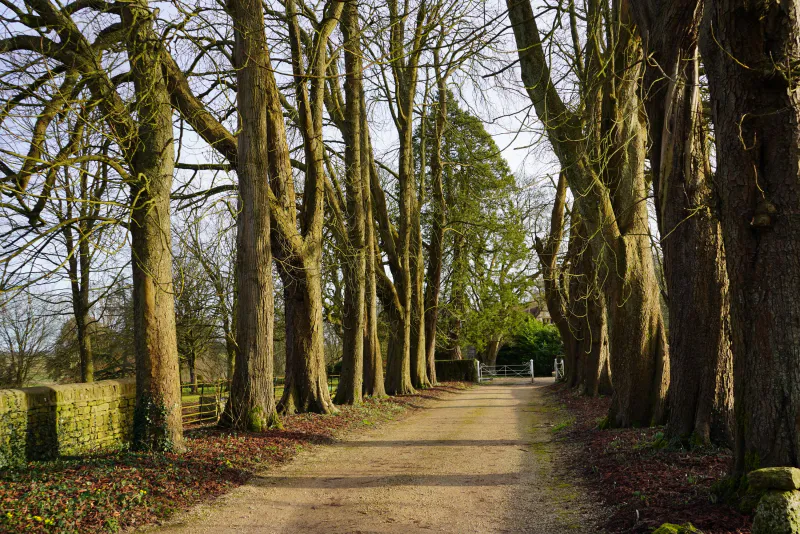
The classic estate hedge. Cut at the right time, beech holds its copper leaves all winter. Both take hard renovation well.
Cut Late summer; renovate in late winter
Slow, dense and the best formal hedge there is. Even an old, overgrown yew can be brought back, one side at a time over two winters.
Cut Late summer to early autumn
How we cut
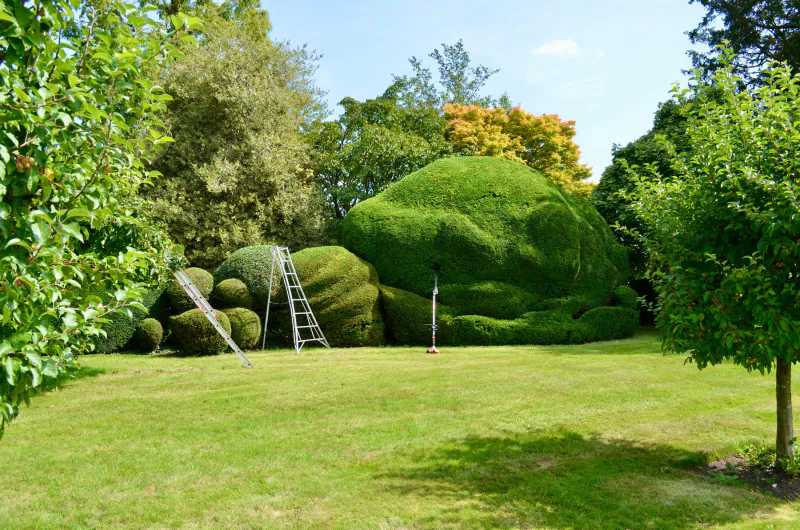
We check the species, how much it can take, and for nesting birds before any cut between March and August.
Height and width are agreed with you up front, and for a reduction we'll explain how far it can safely go this year.
Sheets go down over lawns, borders and gravel so the cuttings don't end up in them.
Lines are set so faces stay straight and tops stay level along the whole run, not just where it's easy to reach.
Every cutting is cleared, and the lawn and borders are left tidy.
When to book
Nesting birds are protected by law, so main cuts and reductions happen from September to February. Light trims in spring and summer happen only after checking for nests. Book autumn cuts over the summer.
FAQs
For most formal hedges, late summer to early autumn, once birds have finished nesting. Hard reductions are best done in late winter, before spring growth starts and before nesting begins.
Cutting isn't illegal, but damaging or destroying an active bird's nest is, under the Wildlife and Countryside Act 1981. So we check before any summer trim and save big cuts and reductions for September to February.
The height, yes: a leylandii can be topped and will hold that height with regular cutting. The sides need care, because leylandii won't regrow from bare brown wood. Cut back past the green and the gap stays. We'll tell you how far yours can go.
Usually. Yew, beech, hornbeam and laurel all regrow from old wood, so they can be cut back hard. We normally do one side one winter and the other side the next, so the hedge stays healthy and keeps some screening.
Talk to them first. If that doesn't work, under the high hedges rules the council can order an evergreen hedge over two metres that blocks light to be reduced. We can only cut a hedge with its owner's agreement, but we're happy to quote them for it.
Yes. Everything is cleared, and the lawn and borders are left tidy.
Tell us roughly how long and how tall it is, and we'll come and look. We'll tell you how far it can be cut and when.